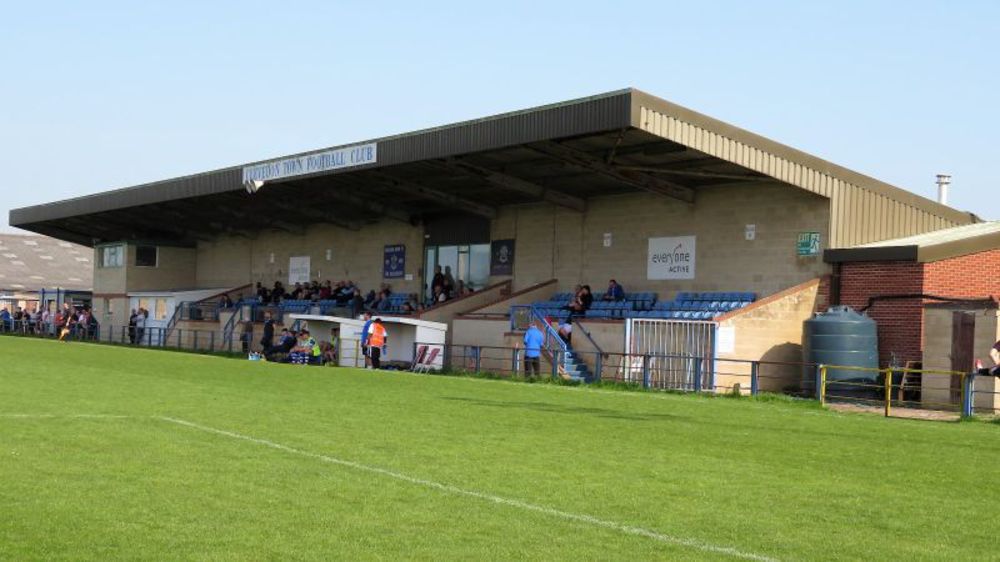
Currently occupying ninth place in the Toolstation Western League Premier Division are Clevedon Town, who were members of the Southern League between 1993 and 2015.
Having originally started playing in 1880, Clevedon are one of the oldest clubs in the West Country and were founder members of the Western League in 1892.
Their stay, however, only lasted three seasons when they dropped back into local football before re-joining the Western League in 1910/11.
Their early years were spent at Dial Hill, still the home of the local cricket club, but they moved to a new site at Old Street (later re-named Teignmouth Road) in 1895 where they remained until 1992.
When football resumed after the First World War, Clevedon found themselves in the Bristol & District League and Bristol & Suburban League before a switch to the Somerset Senior League in the early 1930s helped Clevedon increase their status, and they were to stay there until World War Two brought a temporary end to the league. However, Clevedon stayed in business and entered the Weston-super-Mare League, dominated by teams from nearby RAF Locking.
This often meant playing against international stars stationed at the camp, although Clevedon had their share of service personnel stationed in the town.
After the War they again returned to the Western League and, despite a moderate league record, built up a reputation for themselves in the FA Amateur Cup, reaching the First Round or beyond no less than eight times in thirteen years.
In those days that was no mean achievement and their success brought them to the attention of the national press.
There were many notable victories, including home success over Brigg Sports, Ilford and Dartmouth United. They also faced the mighty Pegasus, Harwich & Parkeston (who went on to reach the 1953 final), Wimbledon (then an Isthmian League side), Billingham Synthonia and Carshalton Athletic.
The FA Cup also brought success with several tussles against Southern League opposition.
One of the finest performances was at Merthyr Tydfil in 1947 when 10,000 people gave them a long ovation after they were defeated 2-1 in South Wales after losing a player with a broken leg after just 20 minutes (no substitutes in those days of course).
The record home gate was against Bath City in September 1951 when 2,300 witnessed a 3-1 win for the Southern Leaguers.
Cup success, however, was not matched in the league and they spent several years in Division Two before resigning, for financial reasons, at the end of the 1957/58 season.
They joined the Bristol & District League where they remained for 15 years, before re-joining the Western League in 1973/74 after amalgamating with another local club, Ashtonians United, who were already members of the Western League ranks.
The club's name was later changed to Clevedon Town to reflect their new status.
With the breaking up of the old amateur status, Clevedon joined the professional ranks in 1974 with Ray Mabbutt, the father of former Spurs captain Gary Mabbutt, who made over 400 appearances for Bristol Rovers, becoming the first paid player.
The building of a new clubhouse and the installation of floodlights in the early 1980s nearly bankrupted the club.
Debts were running at well over £100,000 and desperate measures had to be taken to save the club.
The Board of Directors was forced to resign and the introduction of several new faces saved the club from total disaster, with the overdraft being reduced by careful budgeting and management.
After many years as a mid-table side things began to change when the club decided to sell their Teignmouth Road ground and move to a new site at Davis Lane on the edge of the town.
The club had the foresight to buy the Teignmouth Road site for £450 in 1949 and this wise move enabled the club to sell off the ground, pay off their remaining debts and build a purpose-built stadium from the proceeds.
After the ambitious announcement to move grounds, it was only natural that the playing ambitions should be raised.
In 1991/92, Terry Rowles was recruited as manager from Mangotsfield United, and he signed a whole new team and set about reviving the club's fortunes on the field.
In the last season at Teignmouth Road, they finished as runners-up to Weston-super-Mare , playing their last ever match at Teignmouth Road on 20th April 1992.
Season1992/93 was to prove by far the most successful in the club's history and it was heralded by the move to the new Hand Stadium.
This superb development included an all-weather pitch, training facilities, a 300-seater stand, tiered terracing around the whole ground with an excellent clubhouse and dressing room facilities.
Gates increased to an average of 421 and the team ended up winning the league title in style, remaining unbeaten and scoring 137 goals in only 38 matches.
The season ended with a first ever League Cup final appearance and election to the Southern League Midland Division followed to round off a superb first season at the new ground.
In their first season in the Midland Division, they finished a creditable fifth after having to start the campaign with a new manager, Steve Fey, and a brand new team.
After just one season the club were transferred across to the Southern Division, finishing ninth in 1997/98 before being switched back to the Midland Division for the 1998/99 season.
The switch clearly benefited the club as they managed to win the title after a terrific season in which they also won the Somerset Premier Cup.
In their first season in the Southern Premier Division the club finished in a creditable eighth place, with ambitious plans to develop the ground into a sports and social complex to serve the local community.
The club suffered relegation back to the Western Division at the end of 2000/01, despite winning the Somerset Premier Cup that season and again in 2001/02.
An era ended in September 2004 when manager Steve Fey left the club after eleven years in charge and was replaced by former Plymouth Argyle and Torquay United manager, Kevin Hodges.
He, in turn, left the club in October 2005, with Clevedon top of the league table, to become assistant manager at then-League Two side Yeovil Town.
Former Bristol Rovers player and coach, Phil Bater, took over the job, becoming only the fourth manager at the club in 19 years, and completed the job started by Hodges by building on his success and guiding the club to their second Southern League championship success and back into the Premier Division in 2005/06.
In November 2006 Clevedon played in the First Round of the FA Cup for the first time in their history, losing 1-4 at home to League Two side Chester City in front of a record attendance at The Hand Stadium of 2,261.
In their first season back in the Premier Division, Clevedon consolidated with an 18th place finish in 2006/07, and in 2007/08 improved on this by finishing 11th. However, despite this improvement, and leading them to the final of the Southern League Cup, where Clevedon lost 1-4 on aggregate to Hillingdon Borough, Phil Bater resigned at the end of the season, leaving his assistant Wayne Powell to take over the reins for season 2008/09.
With many senior players also leaving at the same time, Powell was forced to re-build the side, and on a much reduced budget, but despite his best efforts the Seasiders ended 2008 at the bottom of the Premier Division, and Powell was relieved of his duties.
The task of saving Clevedon from relegation in 2009 was handed to former Port Talbot Town manager Nick Tucker.
Tucker and his management team immediately brought in a few new players, who gelled quickly into the team and, as results gradually improved, Clevedon ended the season in 18th place - one place and two points above the relegation zone.
Most of the players were retained for season 2009/10 but, as the UK recession started to bite, Clevedon were forced to reduce the budget again and several senior members of the squad left in January 2010.
Tucker brought in replacements but the team continued to struggle, particularly at home, so in late March 2010 with the Seasiders languishing in 20th place, Tucker resigned and Peter Beadle, once a prolific striker with both Bristol Rovers and Bristol City who had a brief spell at Clevedon as coach under Kevin Hodges, as well as managerial experience with Taunton Town and Newport County, was asked to return to The Hand Stadium as caretaker manager to lead Clevedon through another battle to avoid relegation. However, despite Beadle’s best efforts, the team picked up just two points from his eight games in charge and Clevedon were duly relegated after finishing in 21st place.
In the summer of 2010 former Bristol City, Wycombe Wanderers and Northampton Town defender Micky Bell was appointed as the new manager and he assembled a young but inexperienced squad that finished 20th in their first season back in Division One South & West.
In 2011/12 they again came 20th in the league, but it was in the cup competitions that Clevedon achieved great success as they won Southern League Cup, beating Premier Division team Banbury United 2-1 on aggregate, and then were narrowly beaten 2-1 by Conference South outfit Weston-super-Mare in the Somerset Premier Cup final.
Further cup success eluded the team in 2012/13, but they improved their finishing league position to 15th in a season that featured away wins at all four of the play-off teams.
In January 2014 Bell parted company with Clevedon and former player Paul McLoughlin was asked to move up from his roles as first team coach and head of the academy and youth sections to take over as manager.
The team went on to finish 17th and followed this in 2014/15 with 18th place. However, due to problems with the floodlights at The Hand Stadium, Clevedon were demoted back to the Western League for the start of the 2015/16 season. McLoughlin resigned and almost all the players left.
In October 2015 a sponsorship deal was agreed with a personal fitness company and the Hand Stadium was re-named The Everyone Active Stadium.
Bell returned to take charge of the team and his young inexperienced squad ended their first campaign back at Step 5 in 19th place.
In 2016/17 they improved on this by finishing 14th and in 2017/18 they climbed up to 12th.
After two seasons disrupted by Covid, a full season was finally completed with a seventh place finish in 2021/22.
In October 2021 Bell again left the club and his young assistant, Alex White, was promoted to the role of manager.
Racing Club Warwick were members of the Southern League between 1989 and 2003.
They were originally formed in 1919 under the name of Warwick Saltisford Rovers and played in various local leagues, including the Warwick League, Leamington & District League and the Warwickshire Combination until 1967.
During this period the club won a number of honours, including the Birmingham Alliance Senior Cup when they defeated Birmingham City in the final at St Andrews.
In 1967 the club joined the West Midlands (Regional) League. Three years later they changed to their current name (which came from the fact that their ground is by Warwick Racecourse) and soon afterwards switched to the Midland Combination, where they were champions in 1988 and runners-up in 1989.
After the latter honour they gained promotion to the Southern League where they remained until 2003 when they finished bottom of the Western Division and dropped into the Midland Alliance.
During their period in the Southern League, the Racers best finish was tenth in 1994/95.
They remained in the Midland Alliance until the end of the 2008/09 season, when they were relegated to the Midland Combination Premier Division, now the Midland League Division One.
At the start of the 2016/17 season the club began huge infrastructure renovations following the arrival of local businessman and chairman Gary Vella and the new committee members the previous year, including new changing rooms, floodlighting, stands and artificial training area.
The club's record win is 15–0 recorded on Boxing Day 2016.
They gained their first promotion for 30 years in 2018/19 as runners-up in the Midland League Division One.
The club installed a 3G pitch in the winter of 2020 in order to expand their community activity and provide a broad spectrum of football to include women's and disability amongst other community groups.
A `Soccersix` league plays on Monday evenings and the West Midlands Ambulance Service play their home fixtures at the ground.
After the two abandoned campaigns due to the Pandemic, the Racers finished 14th in 2021/22.
However, this season sees the club currently occupying third place behind Walsall Wood and Lye Town.
They have an experienced goalkeeper in 38-year-old Dan Crane, who once cost Rushden & Diamonds a £50,000 fee when signing him from Burton Albion in January 2006 and has also featured for the likes of Cambridge United, Solihull Moors, Rushall Olympic, Hednesford Town and Bedworth United.
Top scorer is Josh Parsons with 19. He joined the Racers in October 2021 from Northern Premier League Division One East side Sheffield FC, having originally been with Guiseley AFC.
Kory Burke is just behind Parsons with 16, having joined the club from Romulus as a youngster.
Current boss Scott Easterlow was originally appointed as manager in May 2017, he arrived after three successful seasons with Stockton which included a promotion and multiple cup wins. He replaced previous managers Gregg Plumb and Luke Evans.
Despite leading the Racers to the Midland League Division One title on 2018/19, following a run of disappointing results, the club parted company with Easterlow in March 2020.
The 2019/20 season was later expunged due to the Coronavirus pandemic and the 2020/21 season was also cut short due to the pandemic.
Jason Pyott was appointed as manager but he resigned at the end of August 2021 and the club re-appointed Easterlow on 5th September 2021.
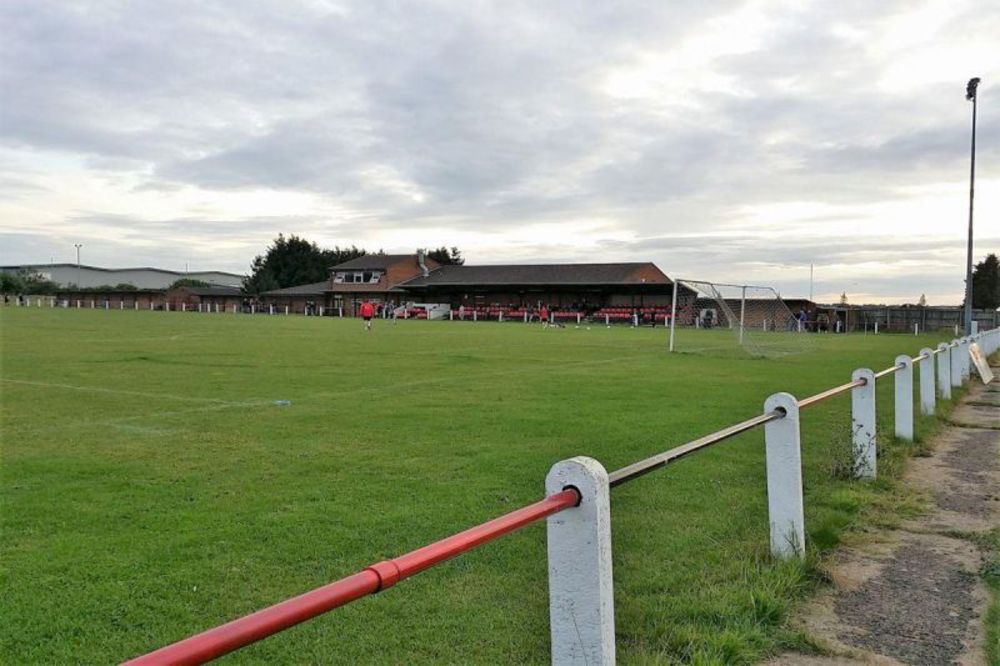
Raunds Town only featured as a Southern League club from 1996 until 2000 and now find themselves at Step 6 level in the Spartan South Midlands League Division One.
A club called Raunds Unity first joined the Northants League in the 1896/87 season which was the secnd in the league's existence and finished sixth out of the nine clubs.
Raunds Unity and by 1900 Raunds Town remained members until the outbreak of World War One but success was elusive and third place out of seven clubs was the highest position the club had reached until that point.
At the end of the Great War, Raunds returned to the United Counties League but finished bottom in its first two seasons.
After a drop into local soccer the club came back to the United Counties League for a single season - that of 1927 and second place in Division Two was achieved.
It was back to local soccer then for the Shopmates (named after workers in the shoe factories that proliferated in the town).
In May 1946 at a meeting at the town's Temperance Hall Raunds Town were re-formed, separate from any previous club with Raunds in its name.
By then the United Counties League had expanded to two divisions again after eleven seasons as one and the new format allowed Raunds Town to join and the club was a member of the league until 1996.
In Division Two until 1956, the highest position Raunds reached was fourth and that was in the 1952/53 campaign.
The UCL changed its format again to a single division and Raunds struggled against better opposition and on four occasions in five years were in the bottom two.
The league was re-organised again and Raunds went into the lower division.
Even there the club struggled in the lower reaches.
However, things began to look up and in the 1969/70 season Raunds Town finished third in the UCL Division Two. However, at the end of the 1978/79 season Raunds were relegated to Division Three of the UCL.
Yet again the league underwent a change of format - in 1980 - and the Shopmates fortunes took a turn for the better.
The appointment of Maurice Murphy as the manager was the catalyst.
In 1981/82 the club was placed third in Division One and the club won the title the following season (1982/83) and was promoted to the Premier Division.
In addition in that 1982/83 season the club won the Northants Junior Cup for the first time.
In 1983/84 Raunds reached the final of the UCL Knockout Cup but lost to the league champions Buckingham Town in the two legged final.
Raunds made steady progress in the Premier Division and in 1987/88 finished in third place.
Two managers had been responsible for this progress - Maurice Murphy who had taken the club into the Premier Division and Alan Wright who was promoted from first team coach following a short spell in charge for Keith Burt in the 1984/85 season.
The club then began to go from strength to strength and in the 1988/89 season Raunds finished sixth in the league and reached the final of the Daventry Charity Cup.
However, Banbury United won that two-legged final while the club lost in the semi-final of the Northants Senior Cup for the third season in a row.
At the end of this campaign Alan Wright decided to stand down as club manager.
Keith Burt, who had a successful spell as reserve team manager, took over the club's football affairs on the departure of Wright and with assistant Glen Burdett, he helped Raunds reach the last 32 of the FA Vase when lost a Fourth Round tie at Berristers to Hucknall Town.
The club finished third in the Premier Division and were semi-finalists in three competitions - the Northants Senior Cup, the Daventry Charity Cup and the Key Consultants Floodlit Cup.
The following campaign – 1990/91 - the second in charge for Burt and Burdett, saw Raunds win two trophies in what was to be the final season at Berristers, the club's home for 40 years.
The final of the Northants Senior Cup was reached and Raunds won against Rushden Town at Hayden Road in extra-time 1-0.
In addition Raunds took the UCL Knockout Cup by beating Irthlingborough Diamonds in both legs of the two legged final (4-2 at Berristers and 2-0 at Nene Park).
A treble was narrowly missed when Eynesbury Rovers just shaded the Hunts Premier Cup at Somersham Town by the only goal of the game.
In addition sixth place was achieved in the league and eventual finalists Gresley Rovers knocked Raunds out of the FA Vase in the Third Round.
Raunds moved to brand new facilities at Kiln Park at the start of the 1991/92 season, opening the ground with a crowd of 1,500 watching Raunds play Crystal Palace.
The first goal on the ground was scored by Raunds' Gary Torrance and the first competitive match was in the Maunsell Cup against Fourth Division Northampton Town.
The Cobblers won by the only goal scored in the last minute.
Raunds finished higher than ever before in the league, being runners-up to Northampton Spencer.
Cogenhoe knocked Raunds out of the Senior Cup, while Diss Town won at Kiln Park in a Third Round Vase tie.
In the 1992/93 season the club finished third in the Premier section of the UCL and reached the semi-final of the KO Cup, going out to Daventry at Elderstubbs.
The club achieved national fame with their exploits in the FA Cup.
In the Second Qualifying Round the Shopmates collected probably the best win in their history, winning at Conference National side Northwich Victoria 2-0 and although the powerful Nuneaton Borough ended the run in the next round, the memory of the day at Northwich will live for many a moon at Kiln Park.
In 1993/94 Raunds faced Conference opposition in the FA Cup Third Qualifying Round but Telford United proved too strong at Kiln Park and ran out 4-0 winners.
A lofty league position was reached but the club’s best effort of the campaign was to reach the final of the Knockout Cup for the third time. However, Northampton Spencer won both legs of the final to take the trophy.
A very promising run commenced in the FA Vase and Raunds reached the Fourth Round for the second time, losing 2-1 to Belper Town at Kiln Park.
For the first team, Shaun Keeble broke his previous season's record by scoring on 45 occasions for the club in all competitions.
The 1994/5 season will be forever remembered as one of the best in the club's history, despite no major trophy coming to Kiln Park.
In the FA Vase the club made its way into the semi-final.
S&L Corby, Great Wakering Rovers, Lowestoft Town, West Midlands Police and Basildon United were all beaten on their own soil with only Leicestershire side St Andrews losing at Kiln Park.
In the semi-final, Raunds took a three-goal first leg lead to Arlesey Town, only to slump 5-0 reverse in extra-time in the second leg and go out 5-3 on aggregate.
That defeat was the only away reverse Raunds suffered all season.
The Vase exploits put the club well behind in its league fixtures but a tremendous struggle near the end saw Raunds catch up with Boston Town on points but it was not enough and the Lincolnshire club took the title on goal difference.
Raunds had lost just two league games all campaign - against Boston Town and Spalding United - the one denying Raunds the title, the other denying Raunds the League Cup.
For the second season in a row Raunds reached the UCL Knockout Cup final and took a three-goal lead at Spalding United to draw the first leg 3-3.
In the second leg at Kiln Park, Spalding took a three-goal lead and it was Raunds who came back and the final ended after extra-time 6-6 on aggregate but Spalding took the cup on penalties.
By virtue of finishing second in the league, Raunds were invited into the UCL Benevolent Cup and Raunds won at Division One champions St Neots Town to go into the final.
Boston Town and Higham Town both declined to play in the tournament and St Neots were invited back and in extra-time in the final Raunds at last secured a trophy by beating the Saints 3-2.
Season 1995/96, however, saw Raunds at last fulfil the promise of the past few seasons although it was left late as a goal by Shaun Keeble in the 4th minute of stoppage time of the final match against Long Buckby saw the club to the UCL Premier Division title.
Ground improvements ensured the club's promotion to the Southern League Midland Division for the 1996/7 season.
In the FA Vase the club reached the Sixth Round losing narrowly to Mangotsfield United.
The 1996/97 season saw Raunds make their debut in the Southern League Midland Division and after a faltering start, the side rallied to finish tenth.
The club also made its bow in the FA Trophy and wins in the qualifying rounds over Barton Rovers, Weston-super-Mare and Bognor Regis Town led to a First Round match at Kiln Park against Conference side Welling United. However, Welling won by the only goal in the first competitive match at Kiln Park played on a Sunday.
A run in the League Cup saw Raunds into the fourth round with victories over King's Lynn, Corby Town and Tamworth before eventual winners Burton Albion won 2-0 at Kiln Park.
1997/98 ended with Raunds finishing in fourth spot in the Southern Midland Division table.
In addition the club reached the FA Trophy First Round again before losing at Bashley 3-0 and reached the Northants Senior Cup by beating Rushden & Diamonds 1-0 in the semi-final. However, a last minute goal gave the cup to Conference side Kettering Town by a 2-1 margin.
After being moved over from the Midland to the Southern Division of the Southern League, Raunds finished the 1998/99 season in sixth spot.
During this campaign they went through without losing a league game at home - a run of 25 home games without defeat.
And the club reached the FA Cup Fourth Qualifying Round (their best ever) before losing 2-0 to Enfield.
In the Trophy they lost to Weston-super-Mare 1-0 at home in the Third Round after a 2-2 draw.
The club yet again reached the final of the Northants Senior Cup, but Rushden & Diamonds gained their revenge from the previous season's semi-final defeat by winning 2-0.
in 1999/00, the Shopmates were shifted to the Southern Division, which was re-named the Eastern Division the following season.
This had financial implications, not least the cost of travelling, and Raunds struggled.
Manager Keith Burt resigned, and the club had little option but to apply for re-admission to the United Counties League at the end of 1999/00.
Under former England semi-professional international left back Nick Ashby, Raunds finished third and fourth in the UCL Premier Division in 2000/01 and 2001/02 but after Ashby left to take over at nearby Wellingborough Town, the Shopmates struggled and were eventually relegated at the end of the 2010/11 campaign.
Various managers came and went but under James Le Masurier, Raunds enjoyed three successive top ten finishes.
But, following the two seasons abandoned due to the pandemic, Raunds, along with several other UCL teams, were switched to the Spartan South Midlands League.
After a 17-placed finish in 2021/22, a new managerial team led by Laurence Revell took over for 2022/23 but lasted barely three months.
Two 22-year-old players, skipper Dean McBride and Luke Aridegbe, were handed the caretaker roles but such was the improvement in form and overall feeling about the place, that their positions as joint managers were made more permanent, making them amongst the youngest managerial team in the country.
Most clubs are looking for volunteers. Find out more on the button below:
www.PitchingInVolunteers.co.ukAll the news and results in one place.
REGISTER