Amongst those sadly passing in 2020 have been well-known names of the football world, such as England World Cup heroes Jack Charlton and Nobby Stiles.
Their deaths, quite rightly, received national and indeed global recognition.
However, there have also been many other former footballers who graced the Southern League – and higher in many cases – whose passing has perhaps not attracted quite so much attention.
Ron Fogg passed away this month at the age of 82
Ron was a Tilbury lad and played as an inside forward or centre-forward.
He was signed by Southend United, making two League appearances before joining Grays Athletic, making his debut on Christmas Day 1958 in an Athenian League match at home to Leyton, where he scored both goals in a 2-0 victory.
He bagged another brace two days later in the reverse fixture, as Grays again triumphed this time by a 6-3 scoreline.
He joined Grays whilst he was in the armed services doing his National Service.
The following season he once again made his first appearance of the season on Christmas Day, once again against Leyton.
Prior to this, he had been a triallist for the Great Britain Olympic team. Three days after this he would score his only Grays hat-trick, in a 4-0 victory in the East Anglian Cup second round tie at home to Dagenham.
His goalscoring exploits came to the attention of Southern League Weymouth, who he signed for in 1961 and went on to make 159 appearances, scoring a remarkable 100 goals.
Aldershot, then in the old Fourth Division, signed the prolific scorer where he made 64 appearances, bagging 28 goals.
He then dropped out of the Football League, playing briefly for Hereford United and joined the very successful Bedford Town team in 1965, making 147 starts with a goal tally of 37.
His next port of call was Chelmsford City where he converted to centre-half with 78 appearances and 2 goals.
He was released by City in 1971 and later played for Brentwood Town, Stevenage, Woodford Town and Dartford. He also had a spell back at Chelmsford in 1972 as a full-time lottery agent.
On retiring from playing, he managed Brentwood where he led them to win the Essex Intermediate Cup.
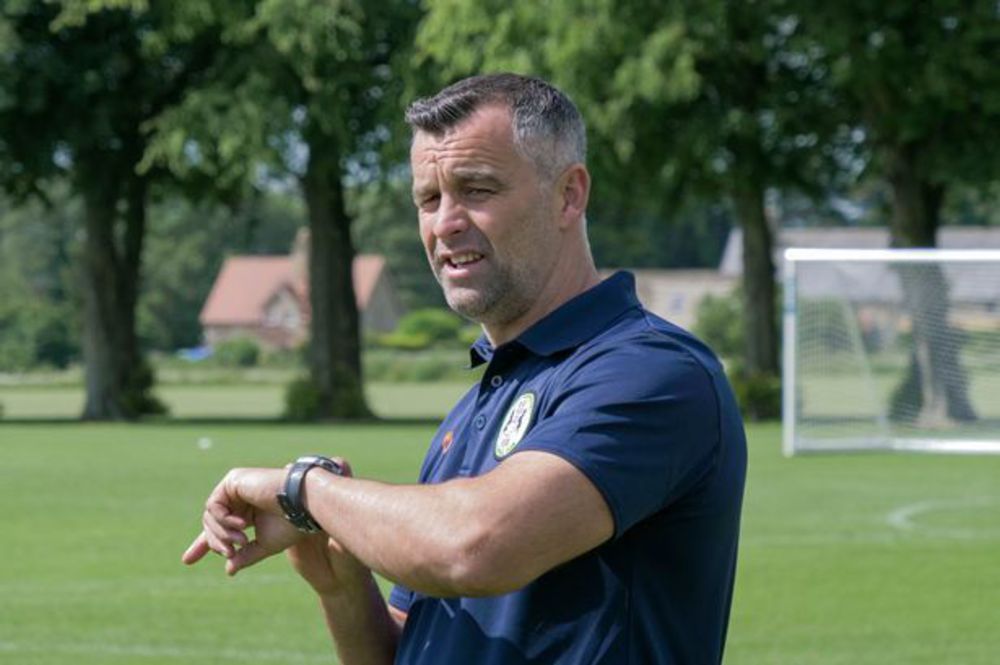
In January 2020, before the first lockdown, came the sad news that Chris Barker (right) had taken his own life.
His association with the Southern League was relatively brief – being player-coach at Hereford FC in 2016 before becoming player/assistant-manager of Weston-super-Mare later that year.
But he was only 39 when he died, and Cardiff Police confirmed his death was not being treated as suspicious.
Sheffield-born Barker played for Cardiff City, Stoke City, Barnsley and Queens Park Rangers in the Football League, totalling over 500 League games before dropping into the Conference with Aldershot Town in August 2013.
During the initial lockdown, I wrote several historical items about the Southern League and a name that cropped up quite a few times was Dudley Kernick.
Born in Cornwall in 1921, he made his senior footballing debut at the age of 13 for Tintagel in the Cornish League before joining Torquay United as a 16-year-old.
He joined the RAF and played wartime football for Birmingham City and Torquay.
In 1947 he signed for Northampton Town for a fee of £3,000 but was only with the Cobblers for a short spell as he was taken on by Birmingham City.
After Birmingham, he signed for then Midland League Shrewsbury Town before moving on to Kettering Town and then Brierley Hill where he was part of the side that beat Nuneaton Borough in the Birmingham Senior Cup final.
He subsequently joined Nuneaton in September 1953 and became an important part of the side that defeated Watford 3-0 and took Queens Park Rangers to a replay before narrowly losing out 2-1 at Manor Park.
The following season Boro again played Football League opposition, going down 2-1 to Brentford.
After leaving Nuneaton he joined Hinckley Athletic, then had a spell with Kidderminster Harriers before becoming youth team coach at Coventry City during the Jimmy Hill era.
He became manager of Southern League Hinckley in 1959 and got them promotion to the Premier Division in 1962/63.
He left Hinckley to move into broadcasting before signing a five-year contract with Nuneaton Borough, guiding the club to the Third Round of the FA Cup before they were knocked out by Rotherham United after a replay.
He became secretary and commercial manager at Manor Park but left the club by mutual consent, believing at the time that they lacked ambition.
In 1970 he joined Stoke City where he was a highly successful commercial manager up until 1985.
After his football career ended, he moved to Florida before returning to Nuneaton in 2015.
As well as having a successful career in football, he was a published author, writing a horror story (The Devil of Trehorra) and his autobiography (Who The Hell Was Dudley Kernick).
He died in Nuneaton at the age of 98.
Denis Howe played for Bedford Town in the Southern League Premier Division in 1959/60.
He was signed by former Arsenal and England centre-forward Ronnie Rooke, who was back at the Eyrie for a second spell in charge.
Howe made 223 appearances in the Football League for Darlington, Southend United and Aldershot in the 1950s.
A full-back or centre-half, he began his career with his home-town club West Ham United, but never played first-team football for the Hammers and moved on to Darlington in 1951.
He played regularly for Bedford Town in his first season with the club, but injuries restricted his second season to just 6 senior matches, the last of which was in November 1960.
He died in June 2020 at the age of 91.
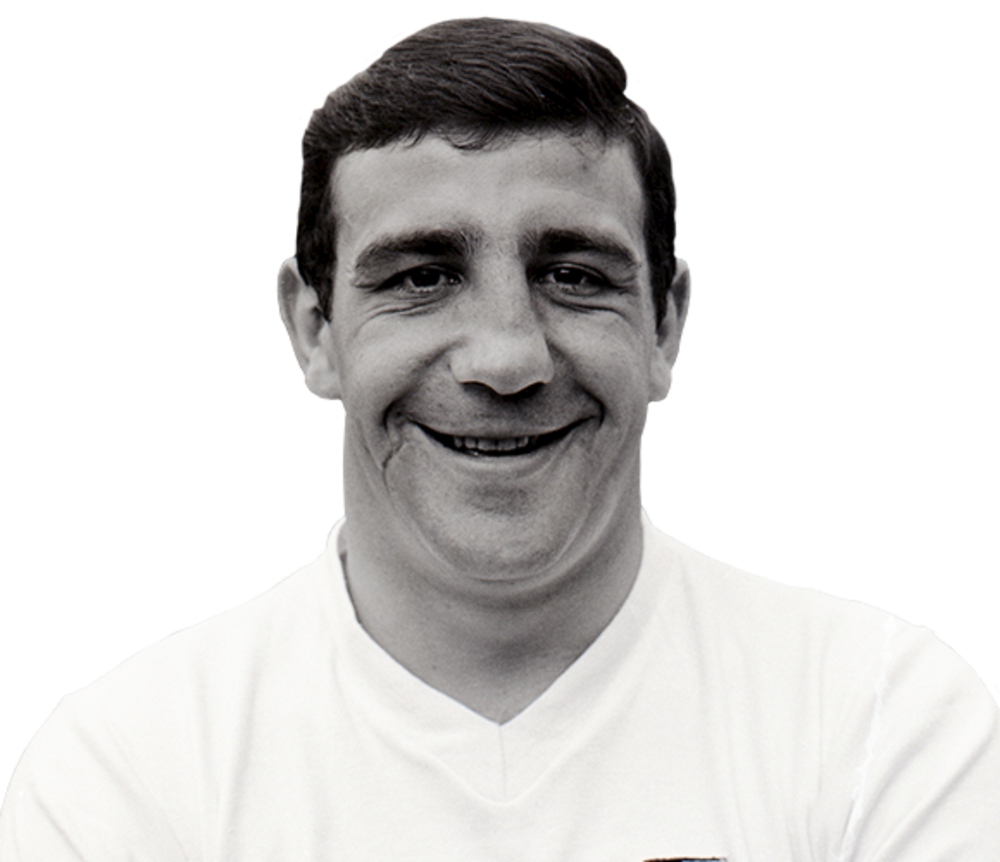
Alex Dawson (left) was a product of Manchester United’s famous youth system under Matt Busby.
The marauding centre-forward first signed professional forms in 1957 and helped the side to a league title triumph that year.
Nicknamed ‘The Black Prince’, he often played as a winger for Busby’s team but caused more havoc as the main striker.
The following season, he played in an emotional FA Cup Final defeat to Bolton Wanderers – the team having lost several players to the tragic Munich air disaster in February 1958 - Dawson achieved the rare feat of scoring a hat-trick in that season’s semi-final.
In 1961, after a decent record of 45 goals in 80 games, he was sold to Preston North End after finding his chances at Old Trafford limited due to the signing of David Herd.
He proved to be a fantastic signing for Preston, finding the net 114 times in 197 appearances for the club.
He was also on the scoresheet in the 1964 FA Cup Final, in which the Lilywhites lost 3-2 to West Ham United.
Dawson spent almost five seasons with the club and his contribution was evident, as he finished as the team’s top scorer in four of those campaigns.
He also scored five hat-tricks during that time, three of which came in the 1964/65 season.
He left for in 1967 but still managed good scoring ratios for Bury (21 in 50 games), Brighton (26 in 57) and on loan at Brentford (6 in 10).
Following his release by Brighton, he signed for Southern League Division One North side Corby Town and was given a job in the local steelworks.
Still aged only 31, he was Corby's top scorer with 25 goals in 60 appearances in his first season at Occupation Road and again with 17 goals in 45 games in 1972/73.
He began 1973/74 in the first team but lost his place after eight games when he suffered a knee injury and was appointed club trainer in September 1973.
He burst back into the team when he came on as a substitute to score in a 3-2 win at Kidderminster Harriers two months later.
At the time of his introduction, the Steelmen were 2-0 down but his arrival turned the game. In all he scored twice in twenty games that season with his final appearance coming in a 1-1 draw at Bletchley in May 1974 and he scored a total of 44 goals in 123 appearances for Corby.
He died in August 2020 at the age of 80.
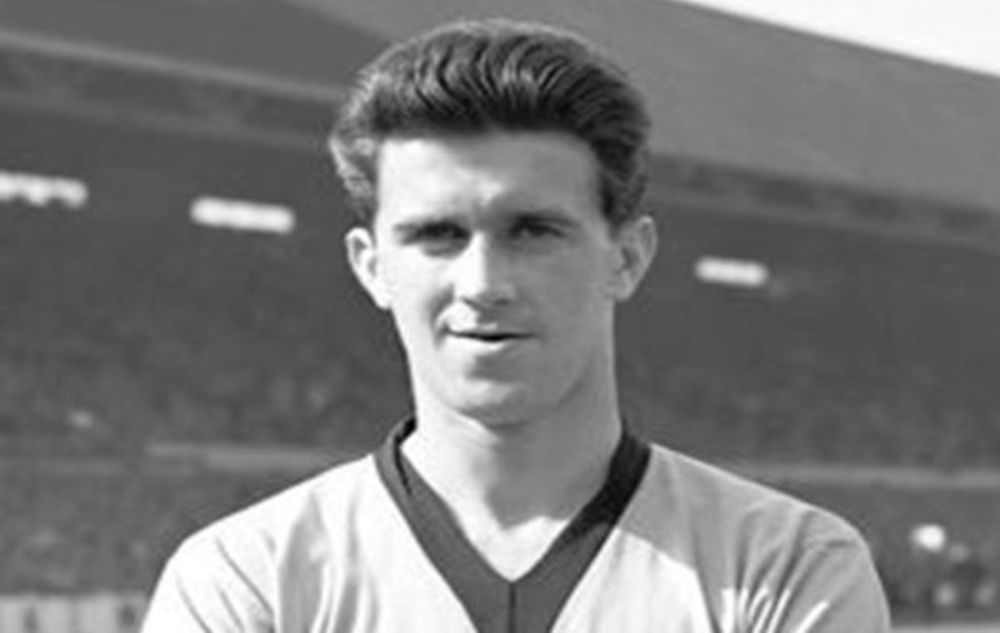
I had the privilege of meeting Harry Hooper (right) in the 1980s when I interviewed him for an article in Kettering Town`s programme I was editing at the time.
He still lived in the town then, having signed for the Poppies in 1963, initially by Wally Akers and then played under the legendary Tommy Lawton, who was brought out of retirement to take caretaker charge.
It wasn`t the greatest time to be at Rockingham Road though as the club were relegated from the Southern Premier Division at the end of the 63/64 season and finished 12th in Division One under former Liverpool defender Dick White the following campaign.
Hooper left for league rivals Dunstable Town at the start of the 65/66 season and after two seasons at Creasey Park, finished his playing days in the Midland League with Heanor Town.
Hooper was born in County Durham in 1933 and played for local side Hylton Colliery before signing professional forms with West Ham United when his father, Harry Hooper Senior, was appointed assistant trainer at the club.
A fast, direct winger, he made his debut for the Second Division Hammers in a 4-2 win over Barnsley in February 1951 at Upton Park in front of 16,781, playing alongside the likes of Ernie Gregory, Malcolm Allison and Frank O’Farrell as West Ham finished 13th in Division Two.
Hooper secured a regular place in the side in the 1953/54 campaign and scored 9 goals in 27 appearances.
His burgeoning reputation saw him become the first Hammer to be selected for the England under-23 team - he scored twice in England’s 5-2 win over Italy at Stamford Bridge in 1955.
His performance at age-group level earned him a place in the England B team and he was selected as a reserve for England’s 1954 World Cup squad. He would never win a full international cap though, with his competition on the wings coming from Tom Finney and Stanley Matthews.
After 119 games and 39 goals, Hooper fetched a record fee for a winger when he signed for Wolves for £25,000 in 1956.
He was Wolves’ top scorer in his first season at Molineux but began to struggle and was sold to Birmingham City in December 1957.
He helped the Blues to a runners-up spot in the Fairs Cup before returning to his native north-east with Sunderland, making 65 appearances and netting 16 goals before joining Kettering.
He passed away in August 2020 in Hunstanton, Norfolk at the age of 87 after a lengthy battle with Alzheimer’s.
Most clubs are looking for volunteers. Find out more on the button below:
www.PitchingInVolunteers.co.ukAll the news and results in one place.
REGISTER