
Although football had been played in the village for at least 20 years previously, the earliest known reference to Rushall Olympic Football Club is in local newspaper reports on matches from the 1893/94 season.
The club joined the Cannock & District League in 1895, finishing as runners-up in their first season and later joined the Junior (where they were champions in 1903/04), Amateur, Parks and Senior sections of the Walsall & District League.
During the inter-war years, the team won a number of local honours. At this time, the team comprised mainly local colliery workers and played on a field behind the Miners Arms pub in Rushall and changed in the pub itself. However, some time prior to the Second World War, the club disbanded.
In 1951, a group of local young men decided to re-form the club. They approached the proprietor of a local fish and chip shop for permission to use his premises as their headquarters and secured the use of Rowley Place as a home ground.
The club joined the Walsall & District Amateur League, where the team won the Second Division championship in 1952/53, and later the First Division championship in 1955/56, after which they gained promotion to the Staffordshire County League (South), where they won the Second Division title at the first attempt.
Following promotion to the First Division, the club won four championship titles between 1960 and 1965. In 1975, in a bid to gain a higher league status, the club decided to move three miles away to the Aston University Sports Ground, just off the main A34 Walsall to Birmingham Road. Meanwhile, the club obtained the lease on some land in Daw End, Rushall, and the new Dales Lane ground was officially opened on 14 August 1977.
The club were accepted into the West Midlands (Regional) League in 1978 and won the First Division title in 1980.
The club enjoyed fourteen seasons of moderate success in the Premier Division, with a highest finish of fifth place achieved in 1988/89.
In 1994, the Pics became founder members of the new Midland Alliance and although the late 1990s brought only mid-table performances in the league, the Pics did defeat the then-Southern League club Rocester at the Bescot Stadium – home of Walsall – in a penalty shoot-out to lift the Walsall Senior Cup in 2000.
After finishing in second place in both 2000/01 and 2002/03, the Pics finally claimed the league title in 2004–05, and with-it promotion to the Southern League Division One West.
They were then transferred to the Southern League Division One Midlands for the 2006/07 season, where they stayed for two years, qualifying for the play-offs in their last season by finishing fifth.
Due to the restructuring of Northern Premier League Division One, they were transferred yet again to the NPL Division One South for the 2008/09 season, when they again finished fifth and qualified for the play-offs.
They were also unsuccessful in achieving promotion this time. Manager Paul Holleran then left the club to be replaced by Neil Kitching, who started his first season brightly before tailing off to finish in mid-table; the team also reached the final of the Walsall Senior Cup under Kitching.
Despite further budget restrictions, Kitching was supported by a relatively youthful backroom staff, including Nick Amos and Ian Cooper, and they went on to finish third in the 2010–11 season, before going on to reach the play-off final, after a 3–0 win over Brigg Town in the semi-final.
A 2–0 victory over Grantham Town in the final saw Rushall Olympic reach the Northern Premier League Premier Division, the first time the club had ever reached the seventh level of the English football league system.
The first season at this higher-level saw Rushall Olympic finish eighth in the league. They reached the final of three cup competitions: the league cup, where they lost to North Ferriby United after extra time; the Staffordshire Senior Cup, where they lost to Kidsgrove Athletic; and the Walsall Senior Cup, which they retained. Rushall also equalled their best ever performance in the FA Cup, reaching the fourth qualifying round, where they were knocked out by Stourbridge.
In 2012/13, Rushall made their debut in the First Round proper of the FA Trophy, having qualified with victories over Woodford United, Chasetown and Droylsden. Their reward was a trip to Wrexham, where they suffered a defeat against a team that went on to win the final of the competition. In the league, Rushall again were on the verge of the play-offs finishing in sixth position but failed to make the end of season competition.[2]
In 2013/14, Rushall Olympic made the Fourth Qualifying Round of the FA Cup before losing out at Grimsby Town.
Rushall eventually finished in seventh place in the league, narrowly missing out on the play-offs. However, there were two cup final appearances, as the Pics lost out in the final of the Walsall Senior Cup but won the Staffordshire Senior Cup, beating Port Vale 2–1 at Vale Park.
At the end of the season, the club parted company with manager of five years Neil Kitching; his assistant, Nick Amos, also left the club. Rushall then appointed former West Bromwich Albion and Bolton Wanderers midfielder Richard Sneekes as manager, with Steve Hinks as his assistant.
The first season under the new managerial regime ultimately saw wholesale changes on the pitch, however an excellent finish of 9th place was achieved.
The 2015/16 campaign ended with Rushall finishing in tenth position, but they did win the Staffordshire Senior Cup for only the third time in their history and won the Walsall Senior Cup for the sixth time after being awarded the trophy when their opponents unexpectedly withdrew from the competition.
Summer 2016 saw a surprise managerial change as Sneekes stepped down and was ultimately replaced by Pics` chairman John Allen, returning to the role he last occupied in October 2006.
Under the guidance of Allen, The Pics finished in mid-table in 2016/17 before Liam McDonald took over the reins and oversaw an eighth-place berth before the club were moved into the newly formed Southern League Premier Division Central where another eighth-place finish came at the end of the first season.
The club were handily placed within the leading pack when both the 2019/20 and 2020/21 campaigns were both ended prematurely due to the pandemic.
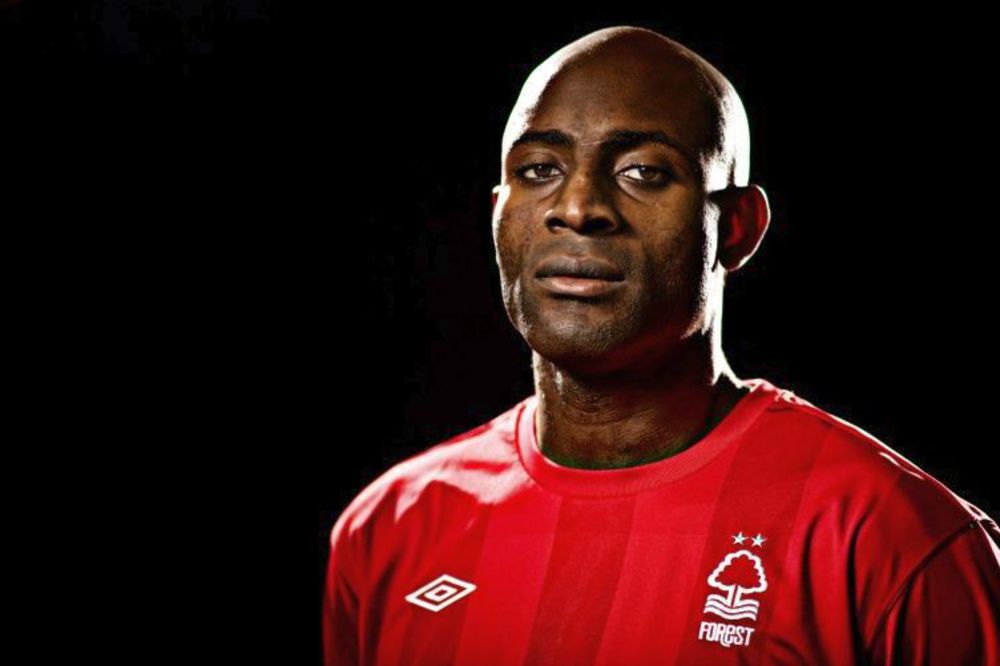
Dele Adebola
Striker Dele Adebola was born in Nigeria but was brought up in Liverpool.
Despite being offered the opportunity to sign as a YTS with Liverpool, instead he decided to join Crewe Alexandra, feeling at the time he would have a better chance of making the breakthrough at a smaller club.
After earning rave reviews following his breakthrough with Crewe, totalling 123 games and 39 goals, Adebola moved to Birmingham for a fee in excess of £1million in 1998 and during his time at St Andrews he helped the Blues to the League Cup Final.
He added over 150 games and 31 goals to his tally with the Blues before moving to Crystal Palace in August 2002.
After playing 39 times and scoring 5 goals, he headed back to the Midlands with Coventry City, where he spent five years, playing 163 times and scoring 31 goals.
Bristol City was his next port of call, where he made 56 appearances and scored 16 goals before Adebola joined Nottingham Forest in 2009.
He was used mainly as an impact player during his two seasons at the City Ground, but still managed to play 62 times and net 5 goals before winding-down his professional career with spells at Hull City and Wrexham.
He signed for Rushall in August 2013 and enjoyed a good raport with supporters in the 2013/14 season before calling it a day.
After retiring from playing, Adebola turned his attentions to putting something back into the community via his training company Strike 9 Training, specialists in delivering corporate football tournaments and creating new sources of funds for the nominated charities and foundations of businesses and organisations.
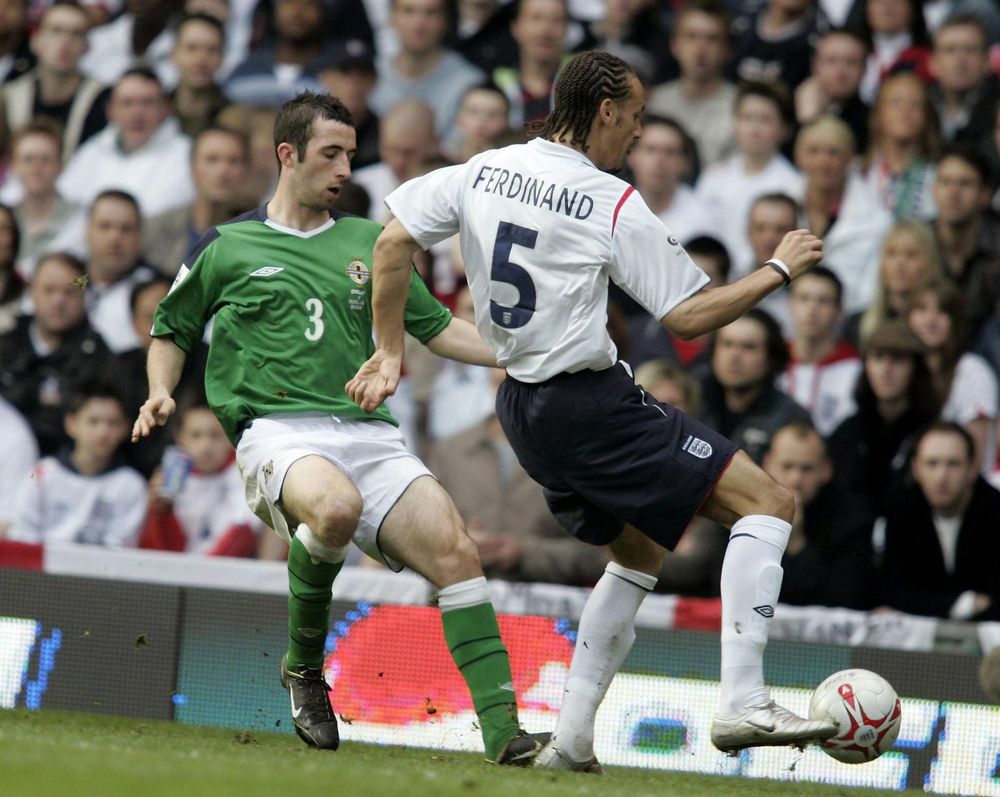
Tony Capaldi
Tony Capaldi was born in Porsgrunn, Norway because his father John, the former Aston Villa and Motherwell player, was playing for Pors Grenland at the time.
However, Capaldi junior qualified to play for Northern Ireland because of a grandmother who was born in Limavady, County Londonderry.
He began his career as a 17-year-old trainee at Birmingham City in 1998 and signed professional forms with them two years later.
He never made the senior side at St Andrew's but did make 14 first team appearances for Hereford United - then in the Conference - whilst on loan there for most of the 2001/02 season.
With Capaldi's opportunities limited to Birmingham's reserve side throughout the following campaign, Plymouth Argyle manager Paul Sturrock brought him to Home Park for a short trial, and in April 2003 his free transfer was agreed.
By this time, he had already won 4 under-18 caps for Northern Ireland and 14 at under-21 level, so it came as no surprise when he made the step-up to the senior side in March 2004.
He won all but one of his 22 full caps whilst at Home Park.
One of Capaldi's caps had been in the province’s famous 1-0 win over Sven-Goran Eriksson's England side at Windsor Park in September 2005, which temporarily de-railed England's qualification campaign for the FIFA 2006 World Cup in Germany.
Capaldi was a regular on the left side of midfield or at left-back during his four years at Home Park and will be especially remembered for his trademark long throw.
He left Argyle in May 2007 after controversially rejecting a new contract, moving to Cardiff City on a free transfer.
He became a regular in the side that reached the FA Cup Final in 2008, picking up a runners-up medal after playing all 90 minutes of the 1-0 defeat to Portsmouth.
A knee injury saw him lose his place at Cardiff, and in November 2009 he joined Leeds United on a short-term loan before being released by the Welsh club at the end of that season, having made 77 appearances for them.
Capaldi returned for a trial with financially stricken Argyle in July 2010 but could not agree terms, and then had trials with Crystal Palace and Heart of Midlothian before joining up with former Northern Ireland manager Sammy McIlroy at Morecambe, where he made 18 appearances in the 2010/11 season.
He then spent two, injury-impacted seasons at Oxford United, making 39 appearances before signing for Conference National side Tamworth and then briefly Barwell before singing for Rushall Olympic in 2014.
He spent three years at Dales Lane before hanging up his boots in 2017 at the age of 36.
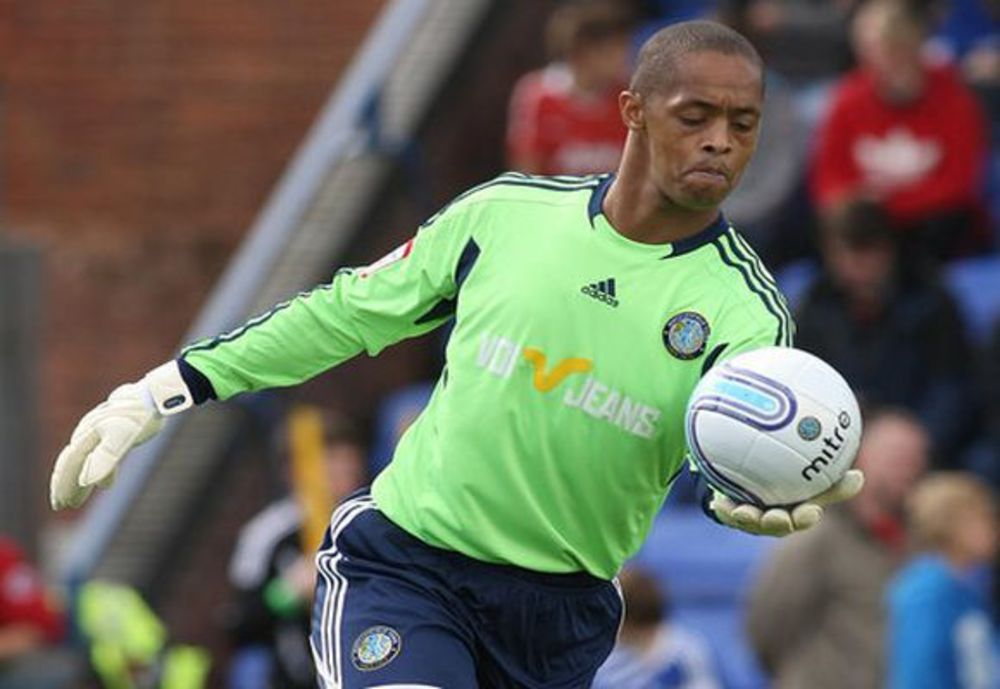
Jose Veiga
Another former international player to have been with the Pics was goalkeeper Jose Veiga.
He has a wealth of experience having started his career in Portugal with Benfica in 1995 before arriving in England at Tamworth eleven years later via Alverca, Levante, Estrela Amodora and SC Olhanense. He was voted as the Lambs` player of the year for 2006/07.
He went on to play for a host of non-League teams, such as Atherstone Town, Harrogate Town, Worcester City, Nantwich Town, Redditch United and also appeared in the Football League for Macclesfield Town, for whom he played 86 times, and briefly Hereford United, before joining Rushall in 2016.
Whilst with Benfica, Veiga won two caps for Portugal at under-18 level but then won the first of 14 caps for Cape Verde at full international level in 2004.
In June 2017, he took up a player/goalkeeping coach role at Hednesford Town.
Rugged left-back Micky Evans was a member of Harry Gregg's squad at Swansea City.
Signing professional for Walsall in May 1964, he made over 250 appearances for the Saddlers and scored at Everton in the 1971/72 FA Cup Fourth Round.
He moved to Swansea, initially on loan, in December 1972, netting 6 goals in 92 League outings while at the Vetch Field before following Gregg to Crewe Alexandra in July 1975.
He added 62 games and 4 more goals to his tally before going non-League in 1977, firstly with Worcester City and then with Stourbridge, Stafford Rangers, Halesowen Town and finally Rushall Olympic, where he wound-down his playing days.
He went on to scout for various Midlands clubs.
A player who could be back playing in the Football League next season is striker Alex Reid, who is currently helping Stockport County lead the Vanarama National League table.
Now 26, Reid signed for Stockport in July 2020.
He started his career with Walsall before spending a year with Swedish side Ange IF after his release by the Saddlers in January 2014.
In early 2015, he signed briefly for Solihull Moors before joining Rushall in February of the same year.
He top scored in 2015/16 with 26 goals and had netted 14 in 2016/17 when he signed for League One side Fleetwood Town in January 2017 for an undisclosed fee.
He had several loan spells whilst on the Cod Army`s books, including stints at Wrexham and back at Solihull, before moving to Stevenage in July 2018.
And whilst at Broadhall Way, he was loaned out to AFC Fylde, Ebbsfleet United and Dagenham & Redbridge before joining Stockport.
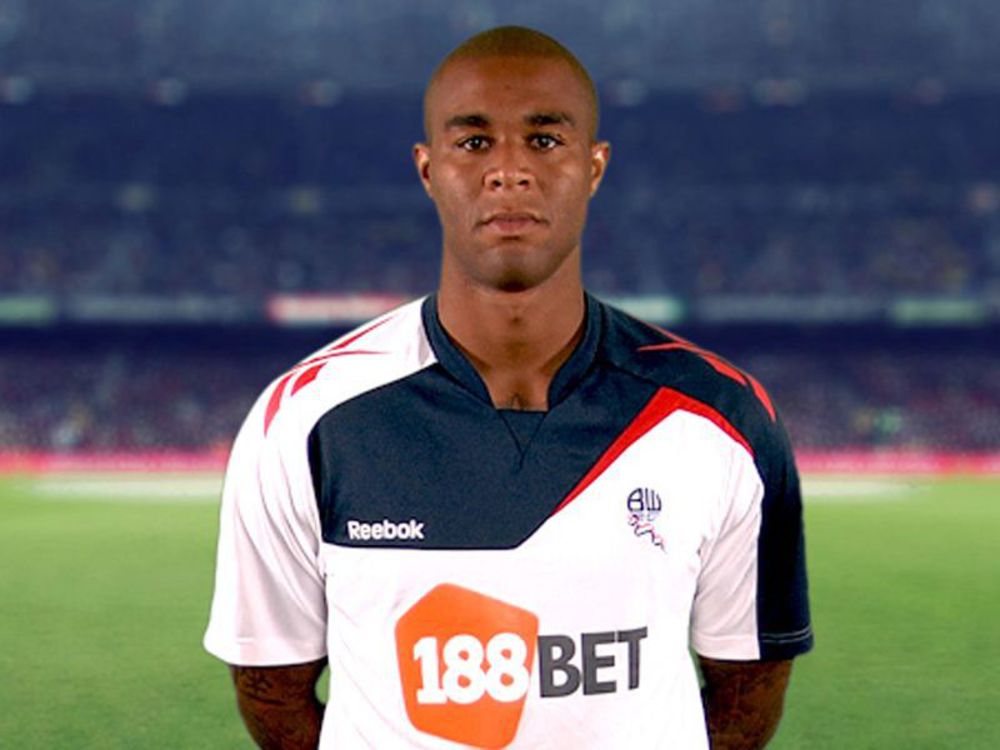
Zat Knight
Big centre-back Zat Knight earned Rushall 30 brand new tracksuits when he was signed by Fulham in February 1999!
He had come through the youth ranks at Dales Lane and became a first team regular, regularly attracting attention from Football League scouts.
However, the Pics couldn’t afford to put him on contract at the time so when Fulham wanted to sign him, they didn’t need to pay a fee – hence owner Mohamed Al-Fayed’s gesture!
He soon became a fixture under Chris Coleman’s management and, despite often being touted as being subject of a move away from Craven Cottage, he spent eight years with the club, making over 150 appearances and also had a spell on loan at Peterborough United in 2000.
Also whilst on Fulham’s books, Knight earned four England under-21 caps and made his full international debut in May 2005 as a substitute against the United States in a friendly match and gained a second cap in a friendly against Colombia later that month.
In August 2007, Knight earned a dream move to the club he supported as a youngster, Aston Villa, for a fee of £3.5 million.
He spent two years at Villa Park, making 40 appearances, before being sold on to Bolton Wanderers for a fee of around £4 million in July 2009.
He played over 170 times for the Trotters between 2009 and 2014 and then spent a season in Major League Soccer in the United States with Colorado Rapids.
Upon his return to England in January 2015, he trialled with Watford before signing for Reading in March 2015 but played only a couple of games before being released at the end of that season, hanging up his boots at the age of 35.
Another defender, Adie Smith, started his career with his local club, Birmingham City.
He turned professional on a two-year deal in 1994 but was released a year later without making the first team at St Andrews.
He subsequently joined Midland Alliance side Willenhall Town in 1995, whilst working on a part-time basis as a roofer but spent only one season at Noose Lane but turned in some very impressive performances, which alerted interest from other clubs.
Smith began his rise up the Pyramid by joining Conference side Bromsgrove Rovers in August 1996, with manager Bobby Hope paying a bargain fee of £1,500 for his services.
Smith spent one season with Bromsgrove, but the season ended in disappointment when the club was relegated.
Smith, however, remained at the top level of non-League football as neighbours Kidderminster Harriers paid £19,000 to take him across Worcestershire in the summer of 1997.
Smith spent seven seasons at Aggborough and became a great favourite with the Harriers faithful.
He was part of the side that was promoted from the Conference in 2000, and also took part in the FA Cup ties against Wolverhampton Wanderers in early 2004.
It was that period of time, mixed with personal tragedy that ultimately spelled Smith’s exit from Aggborough however.
After playing in the 1-1 draw against the men from Molineux in front of 6,000 at Aggborough, he was rocked by the death of his mother.
Football then understandably took a back-seat for Smith, who only went on to feature in the replay at the Premiership side after discussions with team-mates and then-manager Jan Molby.
After making over 250 appearances for Harriers, Smith decided to go part-time and linked up with Tamworth, where he spent four seasons before signing for Chasetown in the summer of 2008.
In November 2009, he moved the relatively short distance to Rushall Olympic and remained with the Pics until the end of the 2012/13 season.
During the following campaign, Smith was appointed as assistant manager at then-Midland League Division One side Stafford Town and also played for them when they were short of players.
He left his position at the start of the 2015/16 campaign.
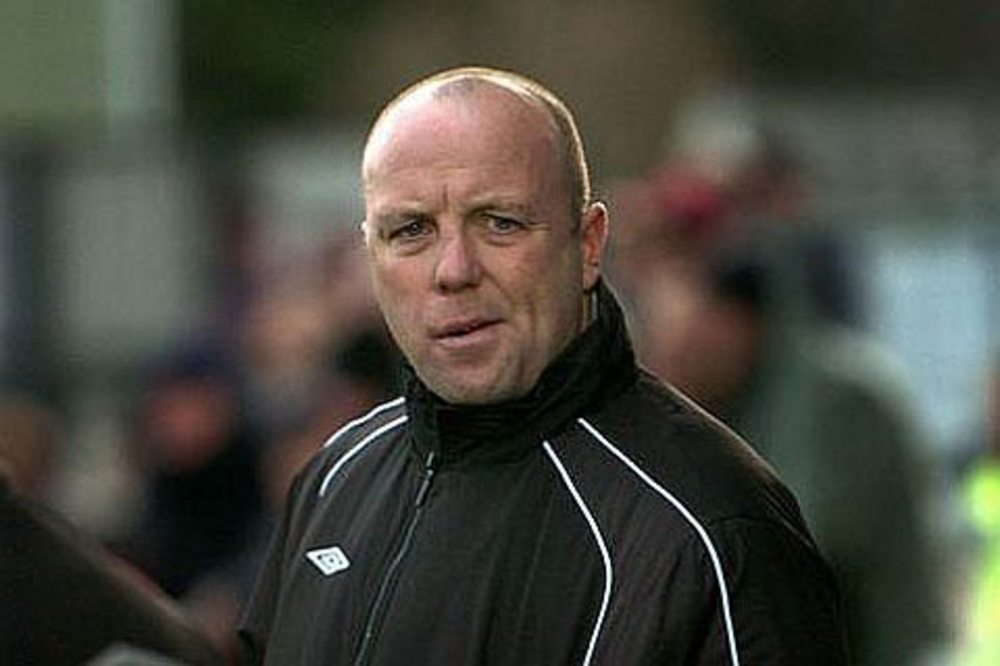
Chris Brindley
Chris Brindley started his career as a youngster with Chasetown in the West Midlands (Regional) League before moving to Hednesford Town for the first time in 1985.
The Pitmen had only been a Southern League club for a year when Brindley arrived but it wasn`t long before the young centre-back was attracting attention for his performances.
And he didn’t have to travel far as it was Wolverhampton Wanderers who came in for his services in 1986.
However, in his two years at Molineux, Brindley was only able to make the senior side 7 times before he was sold to Alliance Premier League (National League) side Telford United in 1988, where he won an FA Trophy winner`s medal against Macclesfield Town in May 1989 at Wembley.
After spending five years at the Buck`s Head, he was sold to Kidderminster Harriers for a £20,000 fee and was twice voted player of the year at Aggborough and won the Conference with Harriers as well as finishing up on the losing side this time in another Trophy final against Woking where he was named man of the match, despite a broken arm.
In January 1998, he re-joined Hednesford in a player/exchange deal and went on to make over 100 appearances for the Pitmen, then in the Conference, before leaving for Stafford Rangers in June 2000.
He returned to Hednesford for a third spell exactly two years later and was appointed as player/assistant manager, scoring the winner in the 2004 FA Trophy Final – his third appearance in the final, although this one was at Villa Park due to Wembley being rebuilt.
He was appointed manager in June 2004 and led the club to promotion back to the Conference via the Southern League play-offs in May 2005.
However, they struggled in the Conference North and Brindley left Hednesford, this time for the final time, in December 2005.
He went on to have spells with Gresley Rovers, Halesowen Town, where he was also assistant boss, Stourport Swifts where he was player-coach and Stafford Rangers, where he was assistant to former Wolves team-mate Steve Bull before replacing him in the hot-seat at Marston Road in December 2008.
Before that he had been a player and also assistant manager at Rushall between 2007 and 2008.
He resigned from his Rangers post in September 2010 and took over as manager of Chasetown in October 2011, quitting in April 2012.
Mickael Partodrikromo left his home in the French territory of Noumea, New Caledonia, which lies 750 miles east of Australia, when he was just 14 to join the Asia-Pacific Football Academy in New Zealand.
Not speaking a word of English, he studied for hours every morning and played football in the afternoon. After three months he passed his English exam and was allowed to go to school with his team-mates in the morning.
Two years later he had trials at Swansea City, Chelsea, Bolton and Sheffield United, who offered him a scholarship.
“It was very hard at the beginning because England was a new life for me,” he said. “I didn’t know anyone. After a month or two I got settled and made friends, so it was good.”
Despite training with the first team, he was released by the Blades, so he went back to New Zealand and joined Team Wellington before returning to Europe in 2015.
He joined Rushall and was awarded the player of the season award for 2016/17.
The club offered an extension of a year, with the terms of contract but in August 2017, Partidikromo joined Sutton Coldfield Town in the Northern Premier League.

Most clubs are looking for volunteers. Find out more on the button below:
www.PitchingInVolunteers.co.ukAll the news and results in one place.
REGISTER